

The systems used in today's industrial landscape are becoming ever more extensive and complex. Comprehensible, clear and structured plant documentation is essential. It not only ensures compliance with legal requirements, but also contributes to efficiency and safety in operation. Digital provision makes it easier for plant operators to access information for training, service and other purposes.
What is plant documentation?
There are many different specifications regarding the content and scope of system documentation. Some manufacturers require a comprehensive operating manual with content such as a system description, safety instructions and information on operation. Others, on the other hand, need support in creating comprehensive system documentation, including plans, supplier documentation, maintenance lists and information on the individual components. Depending on the complexity of the system and customer specifications, the system documentation can vary greatly in scope.
Why is system documentation important?
In addition to the description of system operation, topics such as safety, efficiency and knowledge transfer should also be taken into account when creating the documentation. Ideally, all the above-mentioned objectives can be achieved with well thought-out documentation.
Legal aspects of plant documentation
And, of course, legal requirements also play an important role and must be fulfilled. The plant documentation should comply with the legal requirements applicable in the destination country. In Europe, the EU Directive 2006/42/EC and, in future, the EU Machinery Regulation (EU) 2023/1230 is a central legal basis for machinery and plant manufacturers and therefore also for plant documentation.
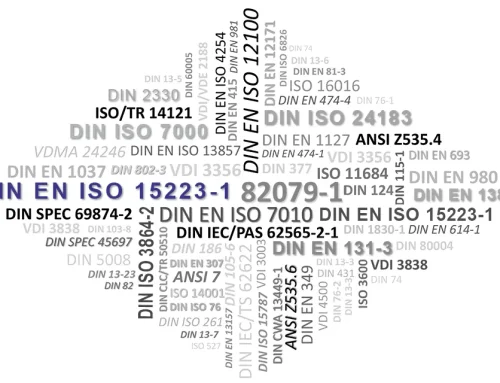
Normative standards that contribute to legal compliance should always be used to implement the system documentation. A standard currently under development, such as IEC 82079-3, will provide valuable assistance in the future when it comes to creating good plant documentation. This is currently under development and should be available in 2026.
Implementation of the system documentation
The typical steps for creating system documentation are as follows:
- Planning: Define scope and target group.
- Define structure: Create a clear outline.
- Collect data: Gather relevant information.
- Create content: Formulate information clearly and comprehensibly.
- Review: Obtain feedback from experts.
- Updating: Check and adapt documentation regularly.
- Distribution and training: Ensure that the documentation is accessible (e.g. in a spare parts system) and that employees are trained.
Digital provision of system documentation
Making plant documentation available in digital form can be a decisive step for companies to distribute technical documents in a more targeted and effective way and to help shape maintenance/servicing at the customer's premises more efficiently. The integration of system documentation into an electronic spare parts system can play a role here. This gives customers targeted access to technical information and makes the entire documentation creation process much more effective for the manufacturer.
Advantages of integrating the system documentation into an electronic spare parts system
- Quick and targeted information search: Maintenance teams and technicians have direct access to relevant information on components that have been installed in the system without having to search for a long time.
- Reduction of paper or sending of data carriers: The direct integration of system documentation into an electronic spare parts system eliminates the need for time-consuming compilation, printing and sending of system documentation.
- Ensure up-to-dateness: Information on system components located in the electronic spare parts system can be quickly updated by the manufacturer and the customer has access to current data at all times.
- Increased operational security: Access-restricted portals (e.g. via project numbers or other identification methods) ensure that the customer can only see their product.
Conclusion
The creation of plant documentation requires good preparation. Due to its complexity, important points such as scope, structure and publication should be clarified in advance. The better the preparation and the clearer the objective, the smoother the implementation. Normative standards help to achieve these goals.
In addition to the actual spare parts business, spare parts systems are also suitable for providing system documentation. The integration of plant documentation into an electronic spare parts system therefore offers huge additional benefits for both the manufacturer and the plant operator.




Leave a comment