
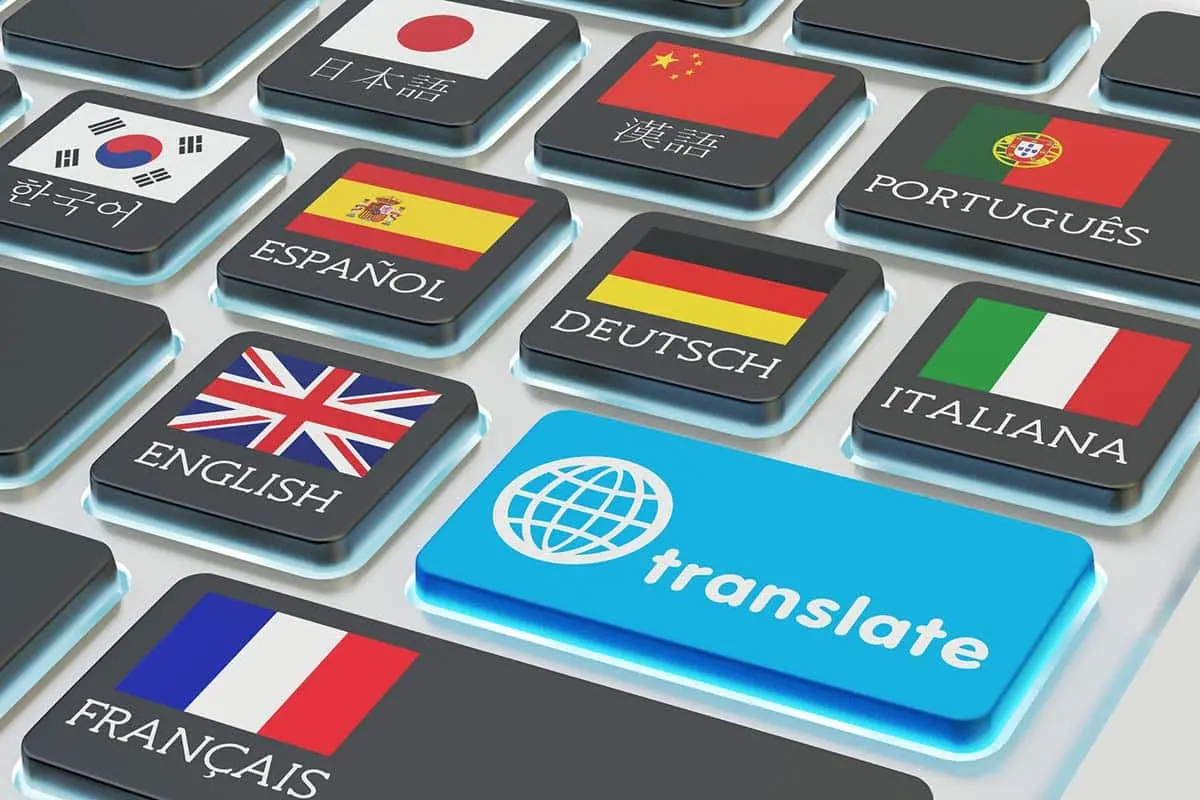
Technical documentation (TD) must be understandable. Requirements for this can be found in German and European liability law, in the German Product Safety Act and the associated regulations, and in relevant EU directives. And since most technical documents are translated into several languages due to the internationalization of markets, comprehensibility is also important for this reason.
Comprehensible texts
Making texts easier to understand not only reduces the amount of research required by translators, but also has a positive impact on the documented product. In addition, source documents that are suitable for translation support the efficient use of computer-assisted translation tools such as translation memory systems (TMS). Not least because of this, the turnaround times for creating multilingual technical documentation are significantly reduced.
Translation-friendly documentation therefore not only reduces the amount of work involved in translation, but also minimizes errors in content and overall costs. The important aspects of comprehensibility in TD at the word, sentence, and text level are covered in tecteam's "Formulating TD" seminar. This seminar also discusses some basic rules for translation-friendly texts.
Rules for texts suitable for translation
- Consistent terminology:
– Standardize technical terms,
– Avoid ambiguity in word choice (synonyms),
– Use unambiguous terms. - Explain technical terms (glossary).
- Explain abbreviations (list of abbreviations) and ensure correct spelling.
- Use consistent and simple sentence structures (subject – verb – object).
- Form sentences consisting of main clauses and main clauses with a subordinate clause (10–15 words).
- Link new information with familiar information: Put familiar information at the beginning of the sentence and new information at the end.
- Avoid accumulations of genitive constructions.
Not: "to unhinge the door of the anteroom of the production cell."
Better: "to unhinge the anteroom door of the production cell." - Use pronouns clearly and avoid them across sentence boundaries.
- Do not formulate sentences without verbs.
- Do not omit any parts of words.
Not: "Bau- und Ersatzteile"
Better: "Bauteile und Ersatzteile". - Use bullet points as a list.
- Avoid filler words and bloated words.
- Use the same sentence structures for the same linguistic functions, e.g., formulate requests for action uniformly (infinitive or imperative).
- Typography and layout:
– Allow extra space in the layout for longer languages,
– Use correct line breaks (no hard line breaks),
– Only use necessary spaces.
The DIN 8579 standard, "Translation-oriented writing—text creation and text evaluation," provides very comprehensive information on this topic.




Leave a comment